
Best Places to Sell Designer Bags: A 2026 Guide
Table of Contents
- Where to Sell Designer Bags: Quick Comparison
- Consignment vs Direct Sale for Designer Bags
- The Luxury Handbag Authentication Process Explained
- Tips for Getting the Most Money for Designer Bags
- Understanding Fees, Payouts, and the Hold Period
- Taxes and Security: What Sellers Need to Know
- Conclusion
- Frequently Asked Questions
Last Updated: September 14, 2026
Where to Sell Designer Bags: Quick Comparison
Finding the best places to sell designer bags starts with one question: do you want cash now or a bigger payout later? That decision splits every option into two camps, and picking wrong costs sellers real money. This guide breaks down the financial mechanics most marketplace roundups skip, from commission rates to payout timing to the tax forms nobody warns you about.
Here's the short version before the detail:
| Option | Speed | Typical Payout | Best For |
|---|---|---|---|
| Direct buyout | 1-3 days | Lower, immediate | Sellers who need cash fast |
| Consignment | 2-8 weeks | Higher, after sale | Sellers chasing maximum resale value |
| Peer-to-peer marketplace | Days to months | Highest, minus fees | Sellers willing to handle buyers themselves |
| Local resale | Same day | Negotiated, variable | Heavy bags, in-person handoffs |
Consignment is an arrangement where a reseller takes possession of your designer handbag and sells it on your behalf, paying you after the item sells. Direct buyout means the reseller purchases the bag outright, so you get paid immediately but at a lower figure.
Consignment vs Direct Sale for Designer Bags
Choosing between consignment and direct sale for designer bags comes down to patience versus payout. Consignment pays more on average. Buyout pays faster. No third option does both.
How Consignment Works
You hand over the bag; the reseller authenticates, photographs, prices, and lists it. When it sells, you receive your cut. Most agreements specify a commission rate, a payout window, and what happens if the item does not sell.
A common approach is tiered commission, where higher-value items carry a lower percentage. Ask for written terms before you ship anything; verbal quotes have a way of changing once the bag is in someone else's inventory.
How Direct Buyout Works
Buyout eliminates the waiting. The reseller quotes a number, you accept or decline, and payment lands within days. The trade-off is steep: buyout offers reflect wholesale value, not retail, because the buyer takes on all resale risk.
For a bag you have not worn in three years, that discount is often worth it. For a rare or discontinued piece, it usually is not.
The Luxury Handbag Authentication Process Explained
Every legitimate buyer authenticates before paying. The luxury handbag authentication process confirms a bag is genuine and protects both you and the buyer. Skipping it does not speed up your sale; it just moves the dispute to after the money changes hands.
What Authenticators Check
Authenticators examine stitching density and pattern alignment, hardware weight and engraving, date codes and serial numbers, interior stamping, and leather grain. For some brands, they also verify the dust bag, authenticity card, and original packaging.
Third-party authentication services use a combination of trained specialists and image-analysis technology. Entrupy's authentication technology overview explains how microscopic imaging is used to verify materials at a level the human eye cannot reliably assess.
Tips for Getting the Most Money for Designer Bags
The biggest lever on your final payout is preparation, not platform choice. A bag with full provenance, clean hardware, and honest condition notes sells faster and for more than the same bag listed carelessly.
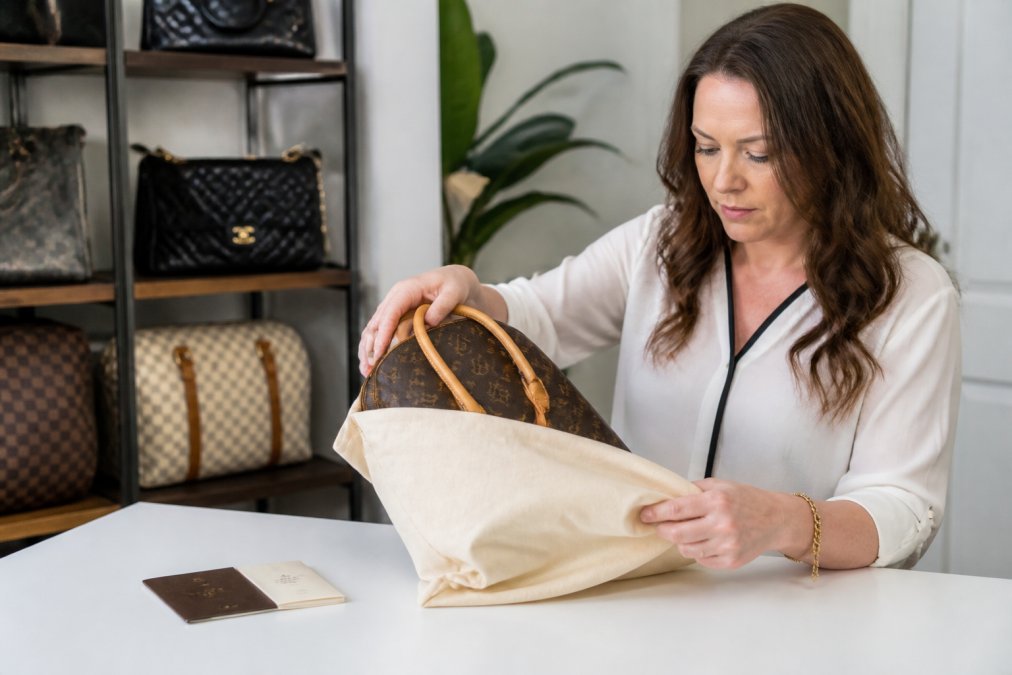
Preparing Your Bag for Sale
- Wipe hardware with a soft dry cloth; avoid polish on plated finishes
- Photograph in natural daylight against a plain background, front, back, base, interior, and any flaws
- Gather the dust bag, authenticity card, receipt, and box if you have them
- Write an honest condition report: scuffs, corner wear, interior marks, odor
- Note the serial number or date code location before you ship
Provenance matters more than most sellers expect. A receipt or original packaging shifts a bag from "second-hand" to "documented," and documented bags command stronger offers. If you have lost the paperwork, say so plainly.
Condition is the other half. Disclose flaws in the listing photos, not in a message after payment. Buyers who feel misled open disputes, and disputes freeze your payout.
Understanding Fees, Payouts, and the Hold Period
The hold period is the window between a sale and your payout, and it is where seller expectations most often break. Marketplaces hold funds to cover the return window and authentication disputes, so a bag that sells on Monday may not pay out for two to three weeks. Consignment shops often settle monthly rather than per-item, meaning a bag that sells on the 3rd may not pay out until the end of the following month. Direct buyout is the only model that pays on a predictable, short clock, usually one to three business days after the offer is accepted.
Fees stack in ways that are easy to miss: a commission or transaction fee, a listing fee on some platforms, a payment processing charge, and shipping costs. A "no seller fees" claim usually means the fee is baked into a lower offer. The only number that matters is your net proceeds, what actually lands in your account after every deduction.
| Fee Type | Who Charges It | What to Watch |
|---|---|---|
| Commission | Consignment resellers | Percentage of final sale, often tiered by item value |
| Listing fee | Some marketplaces | Charged whether or not the item sells |
| Processing fee | Payment providers | Percentage plus a flat amount per transaction |
| Shipping and insurance | Varies by arrangement | Who pays for return shipping if unsold |
| Authentication fee | Third-party authenticators | Sometimes charged to the seller on rejection |
How to Calculate Your Net Proceeds
Run this math before committing to any channel: take the expected sale price, subtract the commission percentage, any listing or processing fee, outbound shipping and insurance, and return shipping if the item is rejected. What remains is your net. A higher headline price with a 30% commission and a four-week hold can easily net less than a lower buyout offer paid in two days.
Worked example using round numbers: a bag that sells for $1,000 on consignment at a 20% commission nets $800 before shipping. The same bag sold peer-to-peer at $1,100 with a 10% platform fee and a 3% payment processing fee nets roughly $957, but you handle the buyer, the shipping, and the dispute risk yourself. A buyout offer of $600 pays in two days with zero follow-up. None of these is universally right; the point is that the spread between them is real and worth calculating.
The Hold Period Is a Liquidity Cost
The hold period is not just an inconvenience, it is a cost. Money tied up in a pending payout is money you cannot redeploy, so if you need liquidity within a month, a consignment arrangement with a 30- to 60-day settlement cycle is the wrong tool regardless of the headline commission.
Payout Methods and Timing
Taxes and Security: What Sellers Need to Know
The 1099-K and Why Gross Is Not Profit
How Personal-Item Sales Are Generally Treated
Fraud Prevention for Sellers
Chargebacks and Dispute Windows
Conclusion
Frequently Asked Questions
What's the best way to sell designer handbags?
The best method depends on your priorities. Consignment typically earns you more because the platform handles authentication, photography, and buyer trust, but you wait for a sale. Direct buyout pays immediately at a lower rate. Peer-to-peer marketplaces cut fees but leave authentication and fraud risk to you. For most sellers with high-value bags, a consignment service that verifies authenticity and handles logistics delivers the strongest balance of payout and safety.
Is it better to consign or sell designer bags outright?
Consignment usually nets you a higher percentage because the seller takes on the work of listing, authenticating, and finding a buyer. A direct sale or buyout gives you cash faster but at a discounted rate. If you need money now or want zero involvement after handoff, a buyout makes sense. If you can wait for the right buyer and want to maximize your return, consignment is typically the better route for designer bags.
How do luxury resale sites determine the value of a bag?
Valuation depends on brand demand, model popularity, condition, age, and whether the bag is discontinued or a limited edition. Authenticators examine leather quality, hardware condition, stitching, and serial number consistency. Bags in pristine condition with original dust bag, authenticity card, and provenance command higher offers. Market fluctuations and current scarcity for a specific colorway or size also shift the number. A condition report from a trusted authenticator anchors the final valuation.
How does the luxury handbag authentication process protect sellers?
Professional authentication confirms your bag is genuine before it reaches a buyer, which prevents disputes and chargebacks after the sale. Services like Entrupy use microscopic imaging and AI to verify materials and construction. Once authenticated, the sale carries documented proof, so buyers cannot claim the item is fake to force a refund. For sellers, this means faster payouts, fewer returns, and a transaction record that protects you if a buyer files a complaint.